 Japan · Asia Post
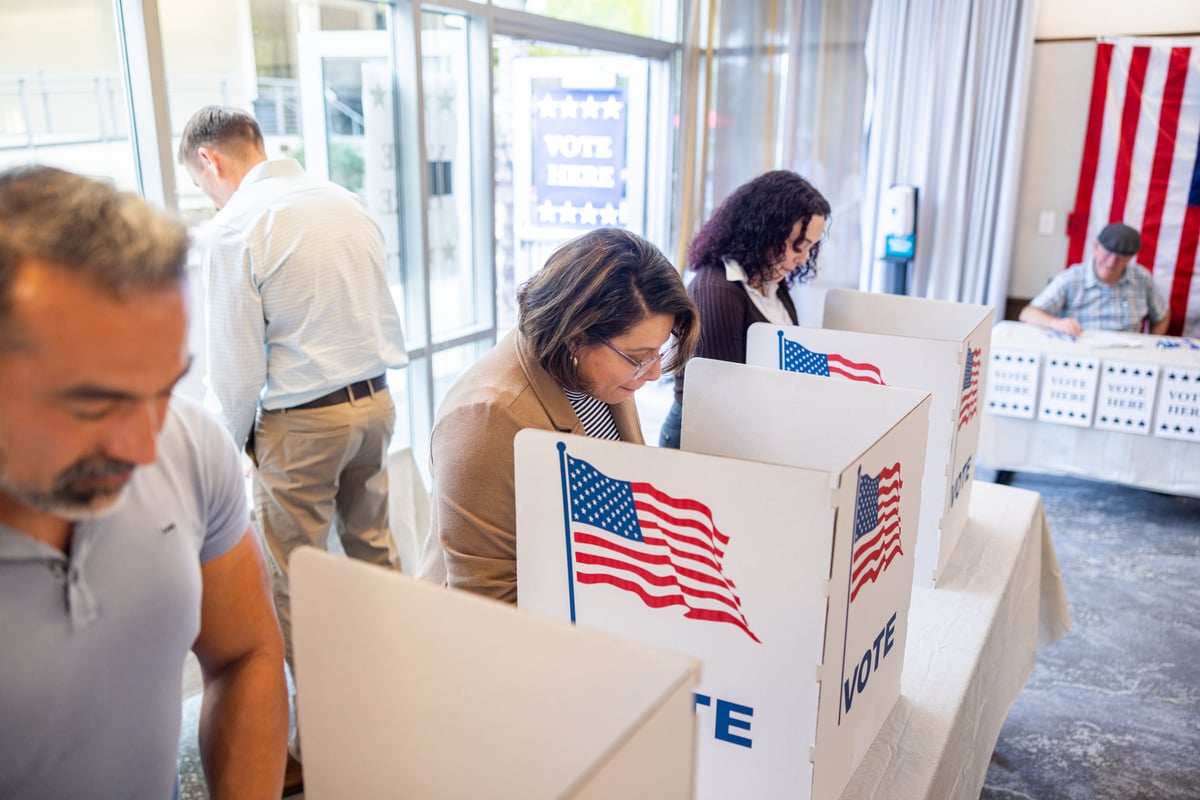
The midterm elections are fast approaching, and the world will be watching as voters head to the polls on Nov. 3 to elect their state representatives in the U.S. House of Representatives and the U.S. Senate.
With politics as partisan as ever and so much going on in the world, including the Iran war, investors will be watching the outcome of the midterm elections to determine what policy could look like over the next two years. While nobody knows what will happen, my prediction is that stocks will soar in the months following the midterm elections. Image source: Getty Images.
The market historically performs well following midterm elections I have plenty of reservations about the stock market right now, particularly given everything going on with artificial intelligence , the fact that the market is about to complete its fourth year of a bull market, and the market has been running at elevated levels for some time. However, the market has historically performed well following midterm elections, which makes sense to some extent. There is a lot of uncertainty in the lead-up to elections because a shake-up in Congress could drastically change policy and affect numerous sectors, if not the market as a whole.
Once the midterms are finished, whether the market likes the results or not, investors will at least have greater certainty as they plan for the next two years of policy. According to research from JPMorgan Chase , dating back to 1950, the broader benchmark S&P 500 ( ^GSPC -0.52% ) Index has been positive over the 12 months following every midterm election, with an average gain of roughly 15%. "In short, history is on the side of investors after midterms, and an environment of solid earnings, steady growth, strong investment and a less aggressive Fed than feared gives us confidence this cycle can follow the pattern," JPMorgan Global Market Strategist Jordan Jackson wrote in a research note on Oct. 7.
"Rather than trying to trade around the election, investors should stay invested, remain diversified and keep their focus on the longer-term drivers of returns." History doesn't always repeat, but here's why I think it will for at least a little while Investors should understand that history rarely repeats itself. Just look back at more recent midterm elections. Since the turn of the century, while the S&P 500 has always been positive in the year following midterm elections, it has rarely hit the roughly 15% average gain.
It got close in 2002 and 2022 and was over 10% in 2018. But it was between roughly 4% and 7% in 2006, 2010, and 2014. As of this writing, the Democrats have over a 91% chance of reclaiming the House, according to Kalshi.
They also have a 67% chance of taking back the Senate. If this comes to fruition, there could be positives and negatives for the stock market. On the positive front, a Democratic-controlled Congress is likely to make it more difficult for President Donald Trump to continue the Iran war.
Regardless of your opinion on the war, a quicker end to the war would more fully reopen the Strait of Hormuz and bring gas prices and inflation down over time , which would be a positive catalyst for stocks. Index S&P 500 Index Today's Change ( -0.52 %) -39.75 Index Level 7,623.68 On the negative front for the market, a Democratic-controlled Congress is likely to be more opposed to data centers critical to AI, which could at some point be an issue for AI stocks that have been powering the market over the past several years. Ultimately, I am bullish because Congress is likely headed for more political gridlock, which Wall Street tends to favor, as it makes it tougher to pass major legislation that might catch the market off guard.
The Democrats will almost certainly take the House. But even if they gain control of Congress, Trump still holds veto power, so Congress would need a two-thirds majority in both the House and the Senate to override a veto. The Democrats would really need to outperform to get that kind of majority, or even overcome a Senate filibuster.
Meanwhile, corporate earnings continue to grow at a very strong pace, so while I do have broader reservations about the market, timing any kind of reset or crash is nearly impossible. Midterms are likely to create a more favorable environment for the market in the near term, and history suggests the stock market is about to enter a period of outperformance.
Source: The Motley Fool